
It is no secret that even highly experienced long-haul drivers sometimes receive fines for improper use of tachographs. Most fines are imposed not for intentional violations but for mistakes made due to carelessness. To help you avoid unpleasant situations, we are sharing information about the most common mistakes made when using tachographs.
Incorrect operating mode selected
One of the most common mistakes is selecting the wrong operating mode on the tachograph, for example, when unloading cargo is marked as rest, or when the driver forgets to change the operating mode after stopping. All activities that are not rest must be marked as other work.
Forgetting to enter manual entries
When switching off the tachograph, taking over another vehicle, or starting a working day after rest outside the truck, it is very important not to forget to manually enter data about previous activities. Failure to record working or rest time is considered a serious violation.
Driver card not inserted or inserted too late
Drivers often start driving without inserting their card, insert it after driving a few kilometres, or forget to insert it after a break. Even a short drive without a driver’s card can be considered an attempt to conceal the actual driving time, so it is important to ensure that you insert the card on time.
Failure to comply with driving or rest time laws
Exceeding the driving time limit, taking too little time off for daily or weekly rest, or miscalculating compensatory rest can result in a fine for the driver. Even a small amount of time over the limit, e.g. just 10 minutes, is considered a violation in most countries.
Using another driver's card
Driving using another driver's card is one of the most serious violations. For this offence, the driver may be subject to a large fine and even a temporary driving ban.
Ignoring tachograph malfunctions
If the tachograph screen is not working, the device itself is not recording activity, is displaying errors, or is experiencing other malfunctions, the driver is obliged to inform their employer of the problem. While waiting for the tachograph to be repaired, the driver must record their activity manually.
Unstored data
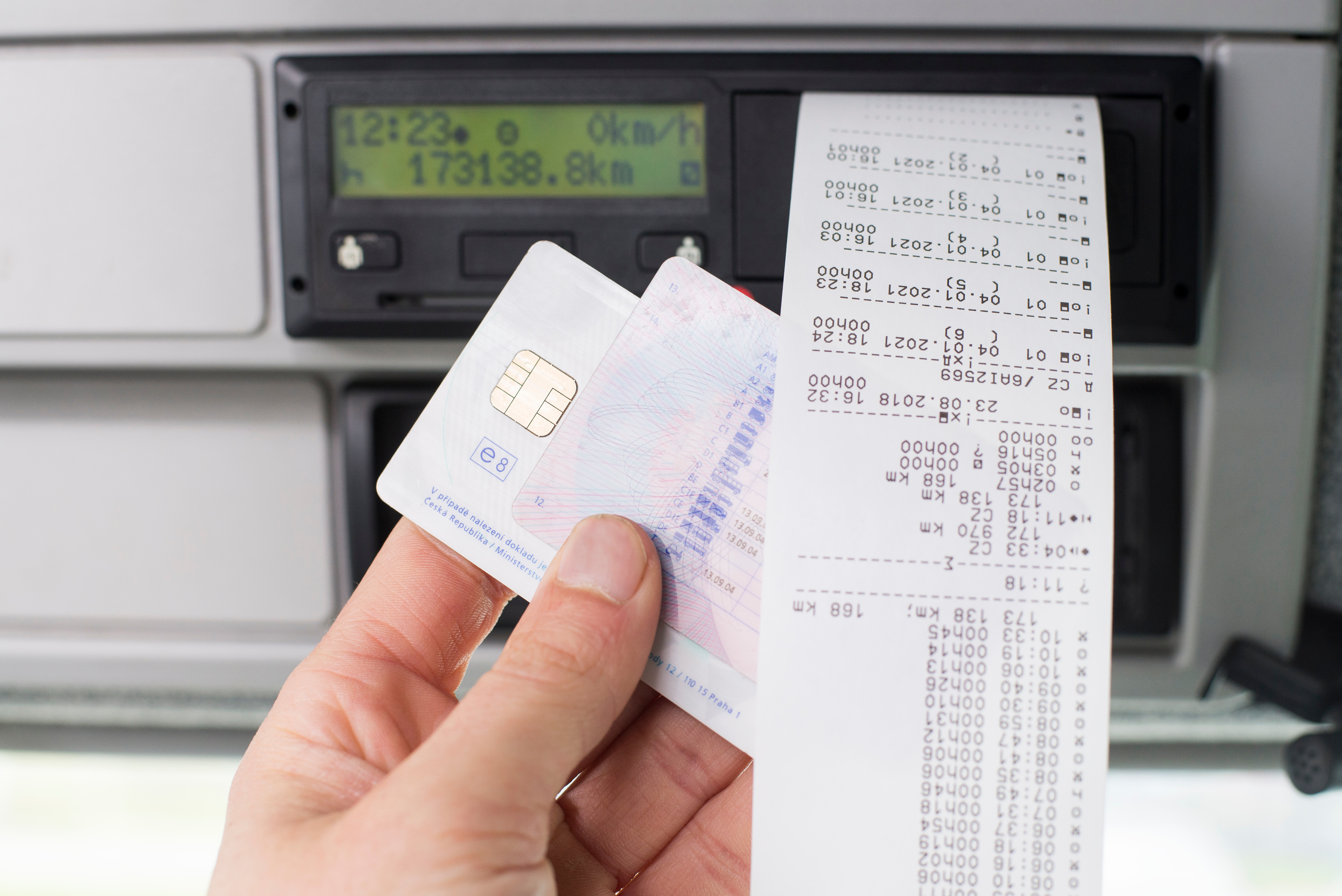
During an inspection, the driver may be required to provide data on previous days' activities and print out tachograph information. That is why it is very important to make sure that the data entered into the tachograph is stored so as not to risk a fine.